RAID rebuild planning should start before a drive fails. The real question is how long the business can safely operate in a degraded state while applications, controllers, drives, and people are under stress. What Should RAID Rebuild Planning Cover Before a Drive Fails? Define the RAID Level, Array Width, Drive Capacity, and Workload Profile Start with RAID level, drive count, drive capacity, media type, controller, workload, and service target. A 12-drive RAID 6 group with 20TB HDDs has a different exposure…
Matching individual specifications is not the same as validating the complete server configuration. A socket-matched CPU, correct DDR generation, and supported drive protocol can still produce a slow, incomplete, or unbootable system. Server BOM validation must test every dependency from workload requirements through delivered labels. What Must Be Confirmed in a Server BOM Before Purchase? Translate the Workload and Deployment Environment into Validation Requirements Define the workload, OS or hypervisor, storage pattern, throughput, availability target, rack environment, and expansion plan.…
Replacing a failed enterprise hard drive is not a simple capacity match. Drives with the same connector and size may behave differently when a RAID controller checks sector geometry, firmware identity, usable blocks, or carrier electronics. Treat compatibility as a chain: record the installed hardware, identify the full storage path, eliminate mismatches in order, and only then compare price or availability. Start With the Failed Drive and the Host Platform Capture the Existing Drive Identity and Array State Photograph the…
A Server Memory upgrade should begin with compatibility, not capacity. A DIMM may fit the slot and still fail during POST because the processor, BIOS, module type, rank structure, or slot layout does not support it. Even when the server boots, an incorrect configuration can reduce speed, disable channels, or leave part of the installed capacity unavailable. How Do You Check Server Memory Compatibility Before an Upgrade? Identify the Exact Server, Processor, and Current Memory Configuration Record the full server model, processor generation, installed CPU count, occupied slots, and current DIMM part numbers. The processor usually contains the memory controller, so it affects supported speeds, channel count, and maximum capacity. Note each module’s capacity, speed, rank, and organization for a reliable server RAM compatibility check. The Huaying Hengtong server memory module range includes DDR4 and DDR5 options for compatible enterprise platforms. Match the DDR Generation, DIMM Type, ECC Support, and Form Factor DDR4 and DDR5 are physically and electrically different and cannot be mixed. RDIMM, LRDIMM, and UDIMM use different buffering methods, so they are not interchangeable. ECC support, voltage, capacity, and organization…
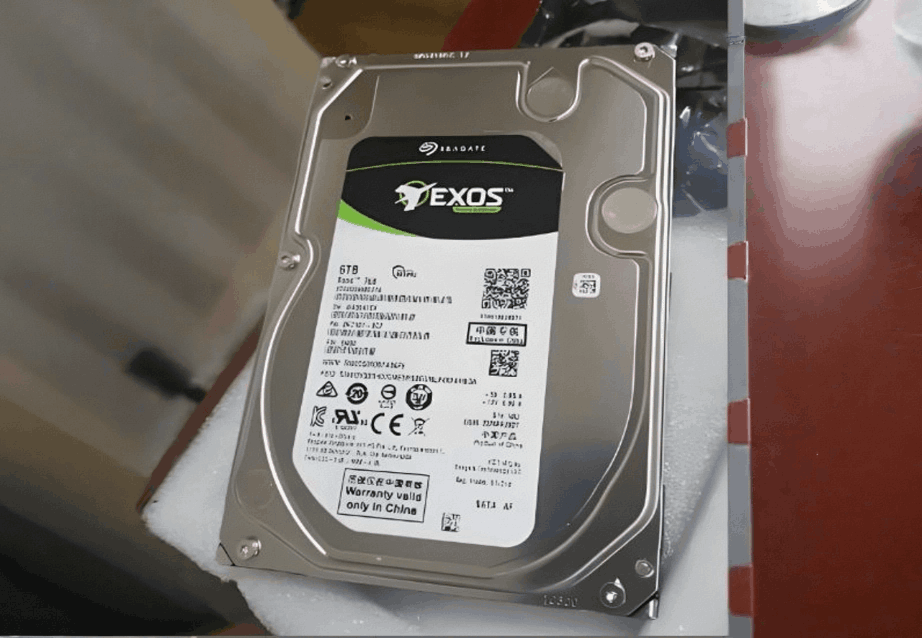
At first glance, Dell vs Seagate enterprise drives looks like a brand comparison. In reality, Dell often qualifies drives made by specialist manufacturers, including Seagate, then applies a platform-specific validation, firmware, monitoring, and support framework. The practical question is therefore not whether one logo makes the media inherently better. It is whether the PowerEdge OEM premium buys the protections your environment genuinely needs. The strongest decision starts with the server, controller, workload, and support model. A drive can fit the bay and still be wrong because its sector format, firmware, carrier, or health reporting does not align with the platform. Judge the premium as the price of a controlled compatibility chain. What Are You Actually Buying in a Dell vs Seagate Decision? The OEM label and the drive manufacturer are different layers In a Dell vs Seagate hard drive comparison, the physical drive may come from Seagate or another approved manufacturer, while the Dell layer covers qualification for selected PowerEdge configurations. A generic model and a Dell-qualified version may share hardware characteristics yet differ in firmware, part identification, supported configurations,…
The lowest server quotation is not always the least expensive choice. A low-priced system may consume more power, require earlier expansion, increase licensing costs, or create extra maintenance work. A complete 3–5-year server TCO calculation measures purchasing, operating, supporting, upgrading, and replacement costs. This helps IT managers compare configurations fairly. What Does 3–5 Years Server TCO Include? Server total cost of ownership covers every expense required to keep a server useful throughout its lifecycle. Why Is the Server Purchase Price Only the Starting Point? The initial quotation may include processors, memory, storage, and the chassis. However, the real server ownership cost may also include: *Rails, cables, adapters, and network ports *Software licenses and renewals *Installation and migration *Electricity and cooling *Support and replacement parts *IT administration The true server cost should be evaluated as a lifecycle expense rather than a one-time purchase. Which Direct and Hidden Costs Belong in the Calculation? Direct costs include hardware, deployment, energy, software, maintenance, and upgrades. Hidden costs may include troubleshooting, compatibility problems, delayed spare parts, emergency migration, recovery work, and business interruption. A useful estimate…
The Growing Memory Demands of Artificial Intelligence The rapid integration of machine learning into enterprise environments has fundamentally shifted how data center architects approach hardware provisioning. Standard computing configurations are no longer sufficient to handle the immense data throughput required by modern neural networks. As organizations scale their deployments, optimizing the foundational memory layer becomes the most critical step in avoiding systemic bottlenecks. Why Large Language Models Require Unprecedented Bandwidth When executing large language models, the processing units are entirely dependent on continuous, high-speed data delivery. If the system memory cannot feed the GPUs or CPUs fast enough, compute cycles are wasted waiting for data, leading to severe performance degradation. This is where the architectural leap to DDR5 memory becomes indispensable, providing the massive memory bandwidth necessary to keep complex AI algorithms processing without interruption. The Bottleneck of Memory Capacity in Deep Learning Training While bandwidth dictates speed, overall memory capacity dictates the scale of the AI project. Training deep learning models involves managing billions of parameters simultaneously. Insufficient memory capacity forces the system to constantly page data to slower NVMe…
Why Virtualization Hardware Demands Are Shifting in 2026 The world of enterprise IT keeps changing quickly. Data centers now face heavy pressure to grow efficiently. Organizations are moving toward more complex digital setups. Because of this, the basic hardware must adjust. It needs to manage a large data flow and complicated resource sharing. The Impact of High-Density Virtual Machines on Server Performance Current applications need strong setups to run without delays. When using High-Density Virtual Machines, older systems often fail to assign enough CPU time and memory. This creates the noisy neighbor effect. One demanding application then lowers the performance of others on the same host. To avoid these problems, IT teams must review their main hardware layer. This step helps ensure smooth growth. Hyperconverged Infrastructure (HCI) Trends and Emerging Bottlenecks The use of Hyperconverged Infrastructure (HCI) has made management simpler. It combines computing, storage, and networking into one system. Yet this combination creates heavy traffic inside the server. Older PCIe designs and network connections turn into clear choke points. They limit the real power of the clustered setup and…