

Why Virtualization Hardware Demands Are Shifting in 2026
The world of enterprise IT keeps changing quickly. Data centers now face heavy pressure to grow efficiently. Organizations are moving toward more complex digital setups. Because of this, the basic hardware must adjust. It needs to manage a large data flow and complicated resource sharing.
The Impact of High-Density Virtual Machines on Server Performance
Current applications need strong setups to run without delays. When using High-Density Virtual Machines, older systems often fail to assign enough CPU time and memory. This creates the noisy neighbor effect. One demanding application then lowers the performance of others on the same host. To avoid these problems, IT teams must review their main hardware layer. This step helps ensure smooth growth.
Hyperconverged Infrastructure (HCI) Trends and Emerging Bottlenecks
The use of Hyperconverged Infrastructure (HCI) has made management simpler. It combines computing, storage, and networking into one system. Yet this combination creates heavy traffic inside the server. Older PCIe designs and network connections turn into clear choke points. They limit the real power of the clustered setup and slow down important data tasks.
Performance Ceilings: Where the HPE DL380 Gen10 Plus Reaches Its Limits
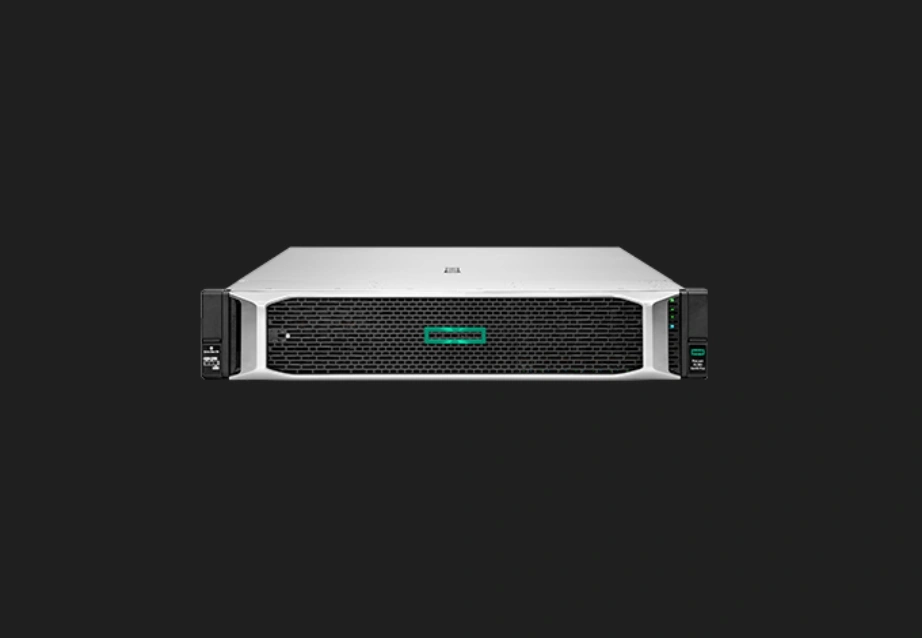
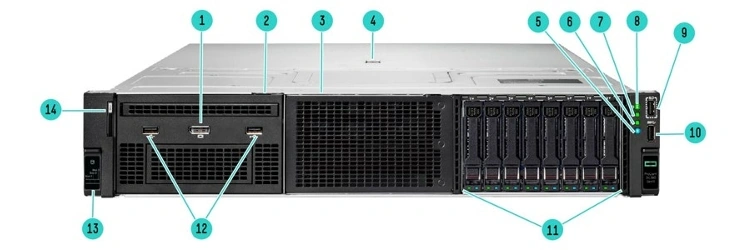
The HPE ProLiant DL380 Gen10 Plus has served as a dependable system for many companies. Still, virtualization software now makes heavier demands. This platform meets built-in limits that cannot be fixed with simple updates.
DDR4 Memory Constraints in Memory-Intensive Workloads
Virtualization depends a great deal on RAM. The Gen10 Plus uses DDR4 architecture. This reaches a set limit on frequency and bandwidth. For setups with severe Memory-Intensive Workloads, such as real-time analytics databases or large virtual desktop infrastructures, the DDR4 bandwidth limit reduces the number of virtual machines that can run well on one node. Paging problems then appear.
I/O Throughput Challenges with NVMe over PCIe Gen4
Storage speed matters for quick start times and fast data access in virtual setups. PCIe Gen4 gives reasonable speeds. Yet adding many high-speed NVMe drives uses up the available lanes on older boards. This limit directly cuts the IOPS for each virtual instance. It leads to small delays in database operations.
How the HPE DL380 Gen11 Solves Next-Gen VM Scaling
The new generation deals with these exact design limits. At Huaying Hengtong, we provide the enterprise hardware needed to close these gaps. This keeps your data center quick to respond and strong.
Unlocking CPU Core Density for Parallel Virtualized Workloads
The newer server supports the latest processors and DDR5 memory technology. It greatly raises core density. This lets hypervisors arrange parallel tasks more efficiently. When combined with high-performance memory modules like the Micron MTC20F208XS1RC56BB1, the system supplies the large bandwidth needed. It keeps the extra CPU cores supplied with data and improves hardware use.
Accelerating Software-Defined Storage (SDS) via EDSFF Drives
Storage designs now need physical drives that give both large capacity and very high speed. The Gen11 chassis holds EDSFF drives. This change raises storage density per rack unit. The new physical layout forms a solid base for faster Software-Defined Storage (SDS) environments. It allows quicker rebuild times and improved storage layering.
Lowering Data Center PUE with Advanced Cooling Options
Thermal management forms a key part of operating costs. The updated chassis design and improved fan setups provide good airflow over important parts. This efficiency helps lower the overall Data Center PUE. It reduces the load on facility HVAC systems even when servers run at full capacity.
Lifecycle Management: Navigating the Server Transition Process
Upgrading the main infrastructure is never a separate action. It needs careful planning and a buying strategy. As a trusted hardware distributor, Huaying Hengtong makes sure our clients worldwide can get the exact setups they need at the right time.
Assessing Total Cost of Ownership (TCO) for Infrastructure Upgrades
Checking hardware goes beyond the first purchase price. A full review of the Total Cost of Ownership (TCO) must cover power use, rack space savings, and software licensing gains. Moving older nodes into fewer, more powerful Gen11 servers often brings clear licensing savings for virtualization software. This speeds up the return on investment.
EOL Timelines and Support Implications for Legacy ProLiant Hardware
Keeping older equipment brings hidden risks. As legacy parts near their End of Life or End of Service Life, finding dependable replacement parts grows hard and costly. Creating a transition plan before official support ends protects uptime and avoids urgent hardware searches during a serious failure.
Final Verdict: Which ProLiant Model Fits Your Data Center Strategy?
Selecting the right hardware depends completely on your specific workload needs and upgrade schedule.
Scenarios Where Sticking with the Gen10 Plus Makes Strategic Sense
If your current setup uses lightweight web servers or fixed file storage, an immediate upgrade may not be required. Companies that invested recently in DDR4 systems can still gain years of service from the Gen10 Plus platform. They must watch their I/O limits carefully.
Environments That Demand an Immediate Gen11 Hardware Refresh
For companies focused on AI modeling large databases or wide HCI clusters, the design jump is necessary. Upgrading network abilities is also important. Pairing the newer servers with high-throughput network cards like the Mellanox MCX653106A-ECAT makes sure data moves quickly between clustered nodes. Huaying Hengtong stands ready to supply these exact high-performance components to fit your deployment schedules.
Frequently Asked Questions (FAQ)
Q: How does upgrading hardware improve Total Cost of Ownership (TCO) in the long run?
A: Newer servers provide higher core densities and better energy efficiency. By combining several older servers into one HPE ProLiant DL380 Gen11, you cut power consumption, cooling costs, and per-socket software licensing fees. This improves your budget across a 3 to 5-year period.
Q: Why are legacy architectures struggling with High-Density Virtual Machines today?
A: Legacy systems use DDR4 memory and older PCIe lanes. These lack the bandwidth needed to support the large number of simultaneous data requests created when many virtual machines run at the same time on one host.
Q: Can newer server models natively accelerate Software-Defined Storage (SDS) deployments?
A: Yes. Modern platforms support EDSFF NVMe drives and PCIe Gen5 interfaces. These supply the large I/O throughput needed for storage nodes to sync data quickly without traditional hardware RAID controllers.
Q: What is the most effective way to lower Data Center PUE through hardware selection?
A: Selecting servers with improved thermal designs, liquid cooling options, and titanium-rated power supplies decreases the heat produced per compute cycle. This directly reduces the power demand on the facility cooling system.
Q: How do modern RAM standards benefit Memory-Intensive Workloads?
A: Moving to DDR5 memory modules, such as the Micron MTC20F208XS1RC56BB1, doubles the data transfer rates compared to DDR4. This change lets large databases and in-memory analytics applications run without memory-related delays.