


The lowest server quotation is not always the least expensive choice. A low-priced system may consume more power, require earlier expansion, increase licensing costs, or create extra maintenance work.
A complete 3–5-year server TCO calculation measures purchasing, operating, supporting, upgrading, and replacement costs. This helps IT managers compare configurations fairly.
What Does 3–5 Years Server TCO Include?
Server total cost of ownership covers every expense required to keep a server useful throughout its lifecycle.

Why Is the Server Purchase Price Only the Starting Point?
The initial quotation may include processors, memory, storage, and the chassis. However, the real server ownership cost may also include:
*Rails, cables, adapters, and network ports
*Software licenses and renewals
*Installation and migration
*Electricity and cooling
*Support and replacement parts
*IT administration
The true server cost should be evaluated as a lifecycle expense rather than a one-time purchase.
Which Direct and Hidden Costs Belong in the Calculation?
Direct costs include hardware, deployment, energy, software, maintenance, and upgrades.
Hidden costs may include troubleshooting, compatibility problems, delayed spare parts, emergency migration, recovery work, and business interruption. A useful estimate should cover spending and operational risk.
Why Compare 3-Year Server TCO and 5-Year Server TCO?
A three-year period often matches standard warranty coverage. A five-year period reveals more about energy use, software renewals, component replacement, and capacity growth.
Good server lifecycle planning should compare both periods because a system that looks economical after three years may become expensive later.
How to Calculate Server TCO Over Three to Five Years
All options should be assessed with the same assumptions.
What Is the Basic Server TCO Formula?
A practical formula is:
Server TCO = Initial Costs + Recurring Costs + Planned Lifecycle Costs + Risk Costs − Residual Value
This total cost of ownership calculation separates acquisition costs from annual expenses, upgrades, downtime exposure, and remaining equipment value.
How Should Costs Be Organized Across the Lifecycle?
One-Time Acquisition and Deployment Costs
These include the server, storage, memory, adapters, rails, shipping, installation, configuration, and migration. Together, they form the initial server deployment cost.
Recurring Annual Operating Costs
These include energy, cooling, software renewals, support, monitoring, backup resources, and server administration costs.
Planned Upgrade and Retirement Costs
These may include memory expansion, drive replacement, migration, secure data removal, and disposal.
This structure makes it easier to calculate server cost over 5 years without double-counting expenses.
How Can TCO Be Compared More Fairly?
Total cost should be connected to useful work. Buyers can compare:
*Cost per virtual machine
*Cost per user
*Cost per application
*Cost per usable terabyte
*Cost per database workload
This prevents an undersized system from appearing more competitive than a properly configured server.
Which Costs Have the Greatest Impact on Server Lifecycle Cost?
Hardware dominates the first-year budget, while energy, licensing, maintenance, and expansion become more important over time.
Hardware, Configuration, and Deployment
The enterprise server hardware cost includes more than the chassis. Processor choice affects performance and software licensing. Memory influences virtualization capacity, while storage design affects speed, redundancy, and expansion.
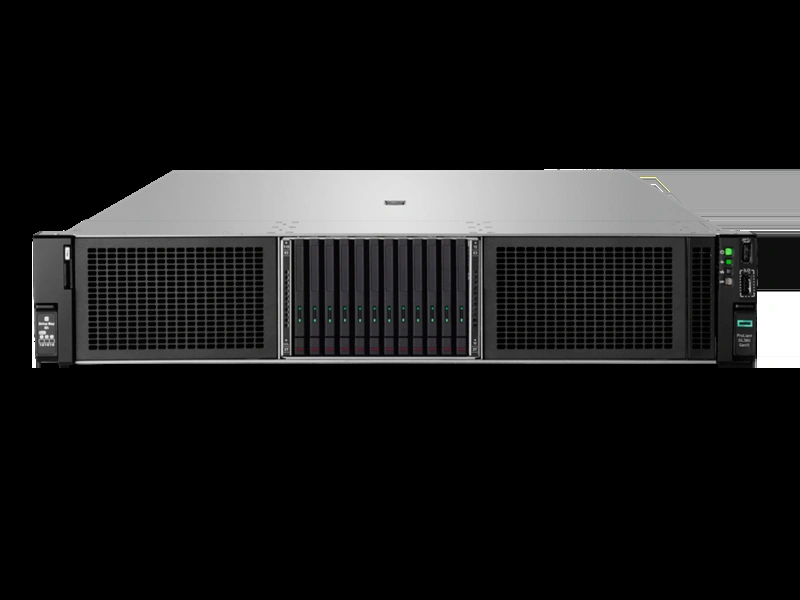
The HPE ProLiant DL380 Gen11 supports flexible processors, DDR5 memory, SAS, SATA, NVMe, and expansion configurations. Selecting every option may raise the server configuration cost without improving current workloads.
Buyers should identify whether the main bottleneck is computing, memory, storage, or networking.
Electricity and Cooling
The server electricity cost should be based on average consumption, not the maximum power supply rating.
A basic calculation is:
Average power in kW × operating hours × electricity rate × infrastructure factor
The infrastructure factor includes cooling, UPS losses, and power conversion. In a private server room, these systems may increase the data center cooling cost.
When estimating server power consumption cost, buyers should consider utilization. An oversized server operating at low load may waste more energy than a properly sized system.
Software Licensing
The server software licensing cost may be calculated by processor, core, user, virtual machine, device, or storage capacity.
Adding processor cores can increase per-core server licensing, even when applications do not need extra computing power. Higher virtualization density may also affect the virtualization licensing cost, backup coverage, and management software.
Licensing should be calculated before the hardware configuration is finalized.
Support, Maintenance, and Administration
The server maintenance cost includes warranty extensions, replacement components, firmware work, monitoring, troubleshooting, and recovery tests.
A suitable server support contract cost depends on the workload’s importance. Production databases and virtualization clusters generally require faster response times than archives or test environments.
The FusionServer 2288H V7 includes remote management, fault diagnosis, lifecycle management, and flexible storage options. These functions may reduce routine administration.
New vs Refurbished Server TCO
A lower initial price does not automatically mean a lower new vs refurbished server TCO.
A complete comparison should examine:
*Warranty coverage
*Component age
*Spare-part availability
*Software compatibility
*Energy efficiency
*Expansion capacity
The refurbished server ownership cost may remain attractive when the equipment has enough service life and capacity. Otherwise, early replacement can push the used server lifecycle cost above that of a newer system.
How Do Growth, Upgrades, and Downtime Change 5-Year Server TCO?
TCO changes as workloads grow and equipment ages.
What Happens When a Server Is Over- or Under-Sized?
Effective server capacity planning uses current workload data and a realistic growth estimate.
An undersized server may require emergency expansion or early replacement. An oversized system increases hardware, energy, and licensing expenses.
Which Upgrades Should Be Planned in Years Two to Four?
Common changes include:
*Memory expansion
*Additional HDDor SSD capacity
*Drive replacement
*Network upgrades
*Backup expansion
*Fan or power supply replacement
These items should be included as part of the planned server upgrade cost. Buyers should also estimate the possible server replacement cost if the platform may not support future workloads.
Planned server lifecycle maintenance is usually less disruptive than emergency expansion.
How Should Downtime Be Estimated?
A simple method is:
Expected incidents × average downtime × estimated cost per hour
The server downtime cost may include employee inactivity, unavailable applications, recovery labor, delayed transactions, and data restoration.
The cost of server failure varies by workload. Good server availability planning aligns redundancy, monitoring, support response, and backups with business impact.
What Does a 5-Year Server Cost Example Look Like?
A clear server TCO calculation example can be organized by year.
|
Cost Category |
Year 0 |
Years 1–2 |
Years 3–4 |
Year 5 |
|
Hardware and deployment |
Main expense |
— |
Possible expansion |
— |
|
Energy and cooling |
Begins |
Recurring |
Recurring |
Recurring |
|
Software licenses |
Initial licenses |
Renewals |
Renewals |
Renewals |
|
Support |
Initial coverage |
Support fees |
Extended support |
Extended support |
|
Upgrades |
— |
Minor additions |
Main upgrade period |
Possible migration |
|
Residual value |
— |
— |
— |
Subtracted |
This server lifecycle cost breakdown should be completed separately for each deployment environment.
An office server may require UPS equipment and cooling. Colocation may add rack, bandwidth, power allowance, and remote-hands fees. A private server room may require monitoring, fire protection, access control, and dedicated cooling.
A fair server TCO comparison must use the same workload, software environment, growth forecast, and availability requirement. Otherwise, buyers may compare enterprise server costs for different tasks.
How Can Businesses Reduce Server TCO Without Sacrificing Reliability?
The largest savings usually come from better planning before purchase.
First, validate workload requirements. Second, calculate licensing and energy costs before finalizing processor and storage choices. Third, match support coverage to the impact of downtime.
A practical server procurement checklist should confirm:
*Workload and utilization
*Ownership period
*Hardware requirements
*Licensing method
*Average power consumption
*Deployment environment
*Backup requirements
*Support response
*Upgrade plans
*Spare-part availability
*Residual value
We at Huaying Hengtong support demand analysis, technical verification, equipment selection, network implementation, quality assurance, operation and maintenance, and service support. This helps customers evaluate lifecycle requirements instead of treating an enterprise server supplier only as a source of quotations.
Effective server configuration support identifies where additional capacity provides value and where it increases long-term expense. That is the purpose of a server TCO checklist.
FAQ
Q: How do I calculate 3–5 years’ server TCO?
A: Add hardware, deployment, annual energy, software licenses, support, administration, planned upgrades, and estimated downtime costs. Subtract the expected residual value at the end of the ownership period.
Q: What costs are included in the server total cost of ownership?
A: Server total cost of ownership normally includes acquisition, installation, electricity, cooling, software, backup, support, maintenance, IT labor, upgrades, migration, and retirement costs.
Q: How can I estimate server electricity cost over five years?
A: Multiply average server power in kilowatts by annual operating hours and the electricity rate. Add an infrastructure factor for cooling, UPS losses, and power conversion.
Q: Is a 5-year server TCO more useful than a three-year calculation?
A: A five-year calculation captures software renewals, hardware upgrades, extended support, component replacement, and energy use. Comparing both periods provides a clearer lifecycle view.
Q: How does server downtime cost affect the final calculation?
A: Server downtime cost can significantly affect business-critical systems. Include expected incidents, recovery time, employee disruption, technical labor, delayed transactions, and data restoration