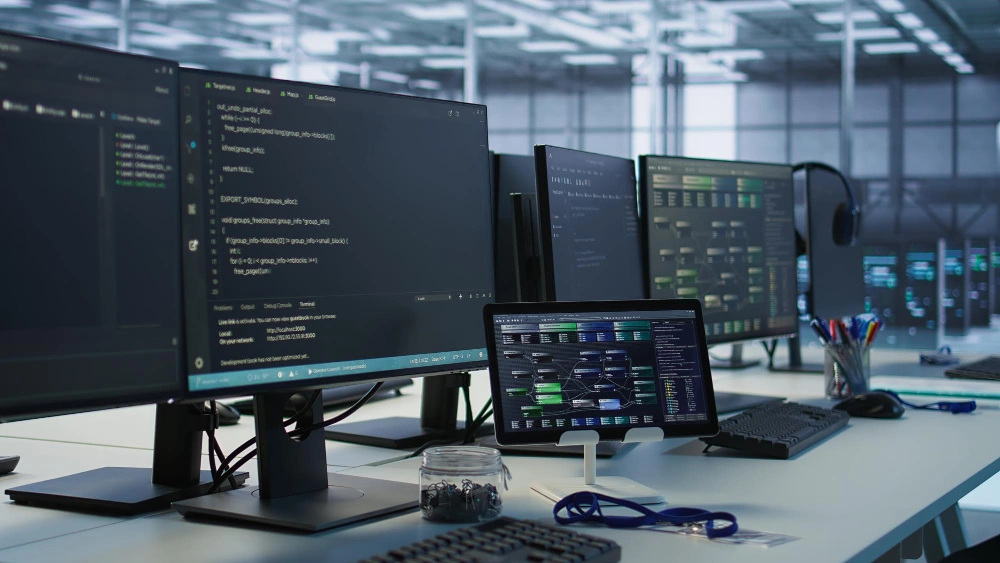
OpenClaw System Requirements 2026: Minimum and Recommended Hardware Minimum Specs for Basic Local Testing The landscape of autonomous AI agents has shifted dramatically, making the hardware discussion more critical than ever. For developers initiating basic local testing, the entry barrier remains relatively accessible. The baseline setup requires at least an 8-core processor and 16GB of RAM to handle sequential command line interface executions without severe bottlenecking. This configuration allows individual programmers to test basic logic flows and API call routing…
What Are the Core OpenClaw RAM Requirements for 2026? Figuring out the exact memory needs for AI agents is the key first move in setting up a strong base. OpenClaw hardware needs grow a lot based on the model's detail level. They also depend on the size of active context areas. Getting these details right helps keep your setup affordable. It also makes sure it responds well to user inputs. Minimum Memory Configurations for Basic Operations For developers building initial…
OpenClaw's quick rise in use has created a worldwide shortage of hardware. This issue focuses mainly on the Mac Mini M4. Many AI fans first turn to the Apple setup. Yet, the idea that it works only on Macs is just a limiting story. By 2026, AI agents will shift from test projects to key business tools. Experts now find that solid ways to set up OpenClaw often come from x86 systems such as Windows and Linux. The 2026 OpenClaw…
As artificial intelligence-generated content and big data analytics workloads continue to surge, enterprise computing environments face unprecedented data throughput pressures. In this highly demanding landscape, hardware bottlenecks have become more apparent than ever before. The latest server architecture, such as the HPE ProLiant Gen11 series, represents a massive leap forward, largely due to its comprehensive support for next-generation technology. Proper configuration of Memory Modules is the absolute key to maximizing the return on investment for these advanced systems. This complete buyer's guide explores the most suitable options for 2026, while also providing highly cost-effective transition alternatives for infrastructures not yet ready for a full hardware refresh. The DDR5 Revolution in Modern Data Centers In current business setups, memory speed sets the pace for overall computing power. Switching to DDR5 tech doubles the speed over the last version. This fits well with the needs of multi-core work in the latest 4th and 5th Generation Intel® Xeon® Scalable Processors. Why Bandwidth Matters for Advanced Workloads HPE ProLiant Gen11 systems, such as the ML350 and DL380, handle memory modules with speeds up to…
Why Is the Best Hardware for OpenClaw Setups Critical in 2026? The Shift Towards Local-First AI Agents The world of artificial intelligence changes quickly. It moves from central cloud APIs to local-first AI agents. OpenClaw shows this change well. It gives groups full command over their automated tasks. Yet, keeping this data control means local systems must handle all the computing load. This includes steady AI thinking and data handling. How Infrastructure Directly Impacts AI Reliability Software efficiency can only go so far without a robust physical foundation. Running autonomous agents requires systems to remain active continuously without thermal throttling or memory leaks. Subpar infrastructure leads to: Bottlenecked response times during complex queries Frequent system crashes due to memory overflow Corrupted data loops in persistent memory. To maintain high availability, investing in the best hardware for OpenClaw setups is no longer optional; it is the absolute baseline for enterprise-grade automation. What Are the Core Hardware Requirements for Seamless Operation? Decoding the RAM Bottleneck for AI Agents Memory is the most critical chokepoint when deploying local AI. It dictates the…
1. Why is Linux the Preferred OS for AI Training Clusters in 2026? 1.1 Optimized Kernel Scheduling for Generative AI Workloads Generative AI workloads in 2026 need an operating system that can manage large flows of parallel data. This must happen without slowing down hardware. The Linux kernel gives the low-delay scheduling needed to keep high-performance GPUs working at full capacity during tough computing jobs. Business-level Linux versions provide built-in, reliable driver support for the newest PCIe 5.0 connections. As a result, data moves smoothly between processors and accelerators. 1.2 Open-Source Scalability in Large-Scale Distributed Computing Managing hundreds of AI training nodes requires an open-source ecosystem that proprietary systems simply cannot match. Linux environments naturally support advanced containerization tools like Kubernetes and Podman, which are essential for scaling distributed computing environments. At Huaying Hengtong, we have accumulated rich industry experience in demand analysis and network implementation. We leverage this expertise to ensure that the enterprise hardware we provide integrates flawlessly into your Linux clusters, delivering customized IT solutions that maintain exceptional uptime. 2. Typical AI Training Server Configuration in…
Redefining "Budget" in 2026: Beyond the Initial Price Tag Total Cost of Ownership (TCO) as the Primary Metric In the rapidly evolving IT landscape of 2026, the concept of a "budget" server has shifted away from simply finding the lowest purchase price toward optimizing the Total Cost of Ownership (TCO). We have observed that procurement professionals now prioritize energy efficiency and long-term maintenance costs over the initial sticker price. A server with a low acquisition cost can quickly become a financial burden if its power draw is excessive or if it requires constant hardware intervention. In modern data centers, choosing high-efficiency power supplies, such as those with Titanium certification offering up to 96% efficiency, is a critical strategy for reducing operational expenditure (OPEX). Future-Proofing Through Scalability Real money savings come when a company skips the "rip-and-replace" process caused by early hardware wear-out. Choosing servers that work with current standards like PCIe 5.0 and DDR5 memory helps. These let the setup handle growing data flow and network speeds. At Huaying Hengtong, we push for a growth-first approach. In this way, the…
Understanding the Huawei FusionServer 1288H V5 Server Role in Edge Computing Latency The 1288H V5 server fundamentally transforms how edge computing latency is managed by bringing robust processing capabilities closer to the data source. Modern data centers require hardware that can process real-time analytics without the traditional network propagation delays associated with centralized cloud architectures. By deploying high-density hardware directly at the network edge, facilities can drastically reduce the physical distance data must travel. This proximity ensures that critical applications, from local network routing to automated industrial processes, respond in milliseconds. What Makes the 1288H V5 Ideal for Modern Data Centers The small 1288H V5 design fits well in tight spaces at edge points. Traditional large equipment often won't work there. Data center managers now prefer small rack servers. These boost computing strength in limited rack areas. This shape supports dense setups. Yet it keeps full processing power. As a result, companies can set up effective small data centers in outlying or focused spots easily. How 1288H V5 Architecture Minimizes Network Delays Inside the 1288H V5 setup, hardware routing cuts…