


Why Does TCO Matter When Buying a Dell Enterprise Server in 2026?
In 2026, enterprise IT procurement requires a fundamental shift from evaluating upfront acquisition prices to calculating the comprehensive total cost of ownership. Data center infrastructure constraints and rising electricity rates mean that hardware hidden costs can quickly overshadow initial procurement savings.
What Does TCO Include Beyond the Initial Server Price?
A complete TCO assessment goes far beyond the initial server sticker price. It encapsulates ongoing operational line items: specialized deployment labor, software provisioning, active lifecycle maintenance, and mechanical server space. Most critically, it includes the continuous utility expenses required to run data-heavy applications and the secondary facility cooling needed to extract ambient thermal waste.
Why Energy Efficiency Is Becoming a Key Cost Factor
Consequently, implementing robust server energy efficiency strategies has shifted from a corporate sustainability goal to a core financial imperative. With hardware power draws scaling alongside dense modern compute architectures, a server with poor power scaling can easily double its baseline expenditures within a few years of non-stop operations.
What Drives the TCO of Dell Enterprise Servers?
Hardware Configuration, Workload Demands, and Scalability
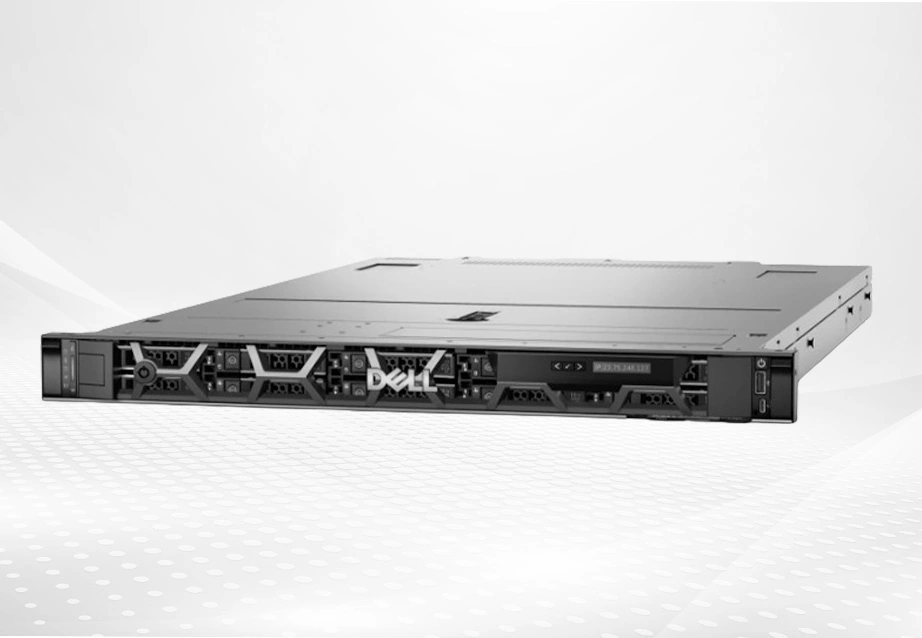
The core of the enterprise server’s total cost of ownership is heavily influenced by early architecture decisions. Component choices directly dictate baseline power profiles. Specifying top-tier configurations for modest application loads creates unnecessary operational overhead. For example, a full-featured enterprise solution like the Dell PowerEdge R650—a dual-socket 1U platform supporting up to 32 DDR4 DIMMs and 12 NVMe drives —provides massive throughput for database analytics. However, running lightweight tasks on such a robust footprint forces the data center to bear high baseline power overhead.
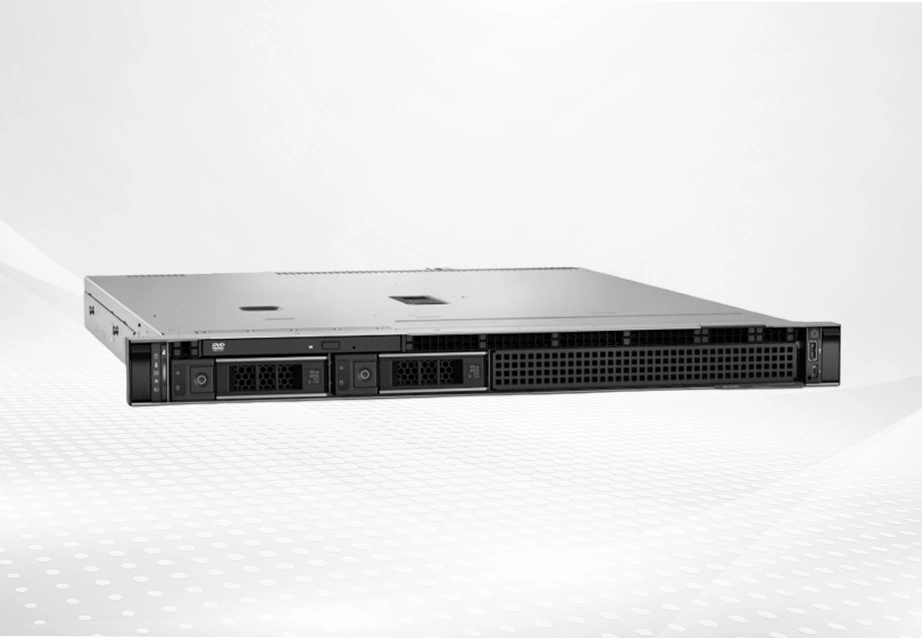
For entry-level or edge workloads, matching requirements to a single-socket system like the Dell PowerEdge R250 proves far more economical. Utilizing an Intel Xeon E-2300 processor and capping memory scaling at 128 GB, it maintains a minimal power envelope perfectly sized for small-scale applications, directly contributing to reducing long-term server costs.
Power, Cooling, Maintenance, and Lifecycle Costs
Thermal management and chassis architecture represent another critical TCO pillar. A pivotal question for infrastructure managers evaluating thermal design is: Do PowerEdge air-cooled systems lower total cost of ownership for enterprises? In many high-density deployment scenarios, advanced air cooling delivers notable financial advantages over liquid alternatives. Platforms like the 2U dual-socket Dell EMC PowerEdge R550 combine optimized chassis aerodynamics with up to five cold-swap fans to reliably dissipate the heat of dual 24-core processors. By choosing high-efficiency air designs over liquid setups, enterprises avoid complex plumbing, specialized facility renovations, and the heavy preventative maintenance costs that typically inflate data center bills.
How Can Energy Efficiency Reduce Long-Term Server Costs?
Why Power Consumption Should Be Evaluated Before Purchase
Evaluating power metrics before deployment is crucial for smart budgeting. Checking the power supply unit efficiency ensures minimal grid loss. Systems equipped with Platinum or Titanium-rated PSUs convert electricity into computing power with optimal efficiency, minimizing the power wasted as stray ambient heat.
How Cooling and Data Center Space Affect Operating Expenses
This thermal output directly ties into facility cooling bills and server room footprints. Efficient hardware reduces the load on facility air conditioning loops and allows administrators to pack components closer together within existing racks, maximizing capital asset density.
What Energy Efficiency Strategies Should IT Buyers Use in 2026?
Match Server Capacity to Real Workload Requirements
To realize maximum savings, IT buyers should embrace a comprehensive approach to deployment. First, audit processing needs to use active telemetry streaming to prevent over-provisioning. Running a low-duty virtualization loop on an over-specified system results in unnecessary overhead, whereas choosing a targeted, right-sized platform offers the exact processing power needed at a fraction of the operating cost.
Improve Rack Planning, Airflow, and Cooling Management
Utilize targeted rack planning—such as cold aisle containment—to ensure ambient air passes straight through the chassis. This allows systems to maintain ideal thermal limits without spinning up internal fans to power-hungry maximum RPMs, optimizing energy use across the entire rack array.
Monitor Power Usage Across the Server Lifecycle
Leverage software automation to monitor active power loops across the lifecycle and enforce smart power caps during off-peak windows. Gathering real-time metrics on power usage and thermal limits allows infrastructure managers to identify underutilized resources and continuously balance work placement.
How to Choose a Dell Enterprise Server with Lower TCO
What Questions Should Buyers Ask Before Procurement?
Buyers should look past raw processing speeds and inquire about dynamic power management features, typical idle power draw, and real-world performance per watt. Understanding how hardware handles variable user traffic provides an accurate look at true operating costs.
How to Compare Short-Term Price with Long-Term Operating Cost
Smarter procurement requires calculating costs over a 3-to-5-year operational window. Comparing short-term acquisition discounts with projected multi-year utility draws reveals that investing in highly efficient components yields substantial net financial gains.
Why Supplier Reliability Matters for Enterprise IT Projects
Ultimately, executing these advanced infrastructure projects successfully requires a reliable partner who can deliver verified hardware and a stable supply chain from initial assessment to ongoing field deployment.
How Huaying Hengtong Supports Smarter Enterprise Server Procurement
At Beijing Huaying Hengtong Technology Co., Ltd., we provide the specialized technical oversight necessary to optimize infrastructure deployment. Established in 2016 with a registered capital of 30 million yuan, we have grown into a premier IT service network across North China and surrounding international markets, backed by a professional channel sales and technical support team of over 100 personnel.
We are not the manufacturers or original designers of the server hardware lines; instead, we act as an authoritative channel partner providing authentic, original standard products from top enterprise manufacturers, including Dell, HP, Lenovo, Inspur, and Huawei. Our core value centers on designing customer-centric, tailored data solutions. Rather than overselling capacity, we analyze your actual workload architecture to deliver precise equipment matching and full quality assurance —ensuring your enterprise limits operational waste, maximizes efficiency, and achieves a fundamentally lower total cost of ownership.
FAQ
Q: How can an accurate baseline for enterprise server total cost of ownership be established before procurement?
A: To calculate a realistic projection, you must look beyond the initial invoice. Combine the hardware acquisition price with estimated multi-year operational expenses, including local utility rates mapped against the system’s expected power draw, software licensing, structural data center square footage costs, and scheduled maintenance contracts.
Q: What are the most reliable server energy efficiency strategies to cut utility bills?
A: The most effective approaches include right-sizing server configurations to match actual application traffic, deploying high-efficiency Titanium power supply units, setting up hot/cold aisle containment in the data center, and using embedded management platforms to monitor thermal profiles and enforce power caps during low-traffic windows.
Q: When considering air-cooled setups, do air-cooled data center systems deliver lower lifecycle expenses than liquid alternatives?
A: Yes, for standard computing densities, air cooling generally yields a lower overall cost. Advanced air-cooled enterprise platforms leverage specialized internal thermodynamics and automated fan profiling to operate safely without requiring the expensive infrastructure renovations, specialized plumbing, and complex maintenance routines tied to liquid cooling deployment.
Q: How does optimizing server power utilization contribute to reducing long-term server costs?
A: Optimizing power usage lowers direct electricity expenditures and reduces the heat generated within server racks. This dual reduction lowers the power requirements of facility cooling units, minimizes the wear on internal components like cooling fans, and allows for greater hardware density, preventing the need for costly data center facility expansions.