


2025 AI Workload Server Upgrades Overview
Why legacy servers struggle for AI training & inference
AI workload server upgrades in 2025 are essential because legacy servers cannot deliver the compute density, memory bandwidth, and storage throughput required for modern AI training and large-scale inference. AI models now process massive datasets with complex computation patterns, and aging servers often lack the parallel processing, NVMe capacity, and GPU compatibility needed to keep pace. As models grow larger, the gap between workload demands and outdated hardware widens quickly. This mismatch increases training time, raises energy consumption, and limits scalability for real-world enterprise use cases.
To address these issues effectively, businesses need to review their entire hardware stack—compute, memory, storage, and networking—to ensure each part can support AI acceleration. This is where structured upgrade planning becomes a strategic investment instead of a cost.
Key drivers for server upgrades in 2025
AI server upgrades in 2025 are driven primarily by expanding model sizes, multimodal AI requirements, and real-time inference expectations. Transformer-based models and LLMs need high-core CPUs, fast GPUs, and a memory footprint large enough to avoid bottlenecks. Meanwhile, enterprise adoption of private AI, on-premise training, and edge-to-data-center workflows is accelerating, pushing organizations to modernize their infrastructure.
Because of these drivers, companies increasingly look for hardware partners who can provide scalable CPU/GPU servers, high-capacity HDD/NVMe storage, and enterprise-grade networking solutions that align with AI computing growth.
Server Hardware Upgrades: GPU, CPU & Storage Optimization
The role of GPU acceleration in AI servers
GPU speed forms the base of AI server upgrades. GPUs give the side-by-side compute flow for neural net training. Current jobs — like language work, image tasks, or mixed models — lean hard on GPU groups over CPU-only setups. Switching to multi-GPU units cuts training time, runs tougher inference jobs, and holds steady benchmarks.
In real setups, groups now pick GPU-fit server frames, better power plans, and flexible builds to grow GPUs as jobs expand. These changes keep the power core solid as AI spreads.
High-core CPUs & large memory for AI training
High-core CPUs and large memory capacities are crucial server upgrades for AI workloads because they ensure balanced performance in data preprocessing, pipeline orchestration, and model compilation. AI training relies on tight coordination between CPU and GPU resources, and insufficient CPU cores or memory can stall the entire system.
Enterprises upgrading servers in 2025 typically consider platforms that support large DDR4/DDR5 memory pools, high-bandwidth CPUs, and multi-socket configurations. This ensures that the system can efficiently handle dataset loading, model sharding, and parallel task execution.
NVMe & storage upgrades for large-scale AI datasets
Fast NVMe storage and big enterprise HDDs stand as main server upgrades. AI jobs need a quick data pull and a steady flow. NVMe SSDs boost training input/output a lot. Big HDDs — like 16TB enterprise drives — hold data sets at a low cost per size.
AI steps like data setup, save points, and embed storage gain big from quick and large storage. Moving to NVMe-based pools, matched with reliable HDD groups, keeps AI build cycles smooth and flows steady.
Network & Interconnect Upgrades to Remove AI Server Bottlenecks
High-bandwidth, low-latency networking for AI model training
High-flow networking ranks as a must-upgrade for 2025 AI jobs. Training groups create heavy side-to-side traffic and steady GPU-to-GPU talk. Low flow caps model growth and slow the spread of training.
New AI servers often use 25/40/100GbE or InfiniBand networks to fix these blocks. With bigger models needing more spread compute, delay cuts matter just as much.
Interconnects in multi-GPU systems: NVLink, InfiniBand
Multi-GPU servers rely on tuned links like NVLink and InfiniBand. These speed GPU talks a lot during training. Such links grow key for larger AI builds and side model training plans.
Updating links in the frame also keeps steady work when growing from two GPUs to four, eight, or more.
Optimizing East-West traffic inside data centres for AI
Tuning side-to-side traffic in data centers marks a vital server upgrade. AI jobs depend on inside data moves more than outside web flow. AI groups sync settings, spread data sets, and swap gradient updates all the time.
Switch changes, neat cable runs, and spread group plans help firms back heavier AI training without jams.
Cooling & Power Infrastructure Upgrades Underpinning AI-Server Upgrades
Liquid-cooling, direct-to-chip vs air-cooling for AI servers
Cooling changes for AI jobs are vital. GPU-packed systems produce much more heat than old servers. Many groups now pick liquid-cooling or chip-direct plans to hold steady AI work under full load.
Air-cooling fits okay for mid setups, but liquid-cooling gives better flow, less noise, and stronger run stability.
High-power-density racks & power-supply design trends
Switching to high-power racks is becoming common. AI-fit servers need more watts per unit. Better PDUs, steady dual-PSU plans, and tuned rack setups let groups run GPU groups and big-memory systems safely.
These changes make sure the power base always backs the compute layer well.
Sustainability in AI server upgrades: balancing green & performance.
Green goals grow in server changes. AI groups use lots of power. Good cooling, smart power control, and pack strategies help firms cut carbon while boosting AI work.
Enterprise-Grade AI Server Upgrade Plan for 2025: Selection & Rollout Guide
How to assess AI workload demands: training vs inference.
Check the AI job type first to set server change plans. Training needs multi-GPU power and fast NVMe layers. Inference eyes delay, power flow, and growth.
Server upgrade budgeting & ROI analysis
Directly affects long-term TCO (Total Cost of Ownership). TCO includes not only the initial server price but also power consumption, cooling requirements, performance per watt, upgrade scalability, and operational efficiency. Evaluating TCO helps organizations avoid overspending on hardware that delivers low productivity return over time.
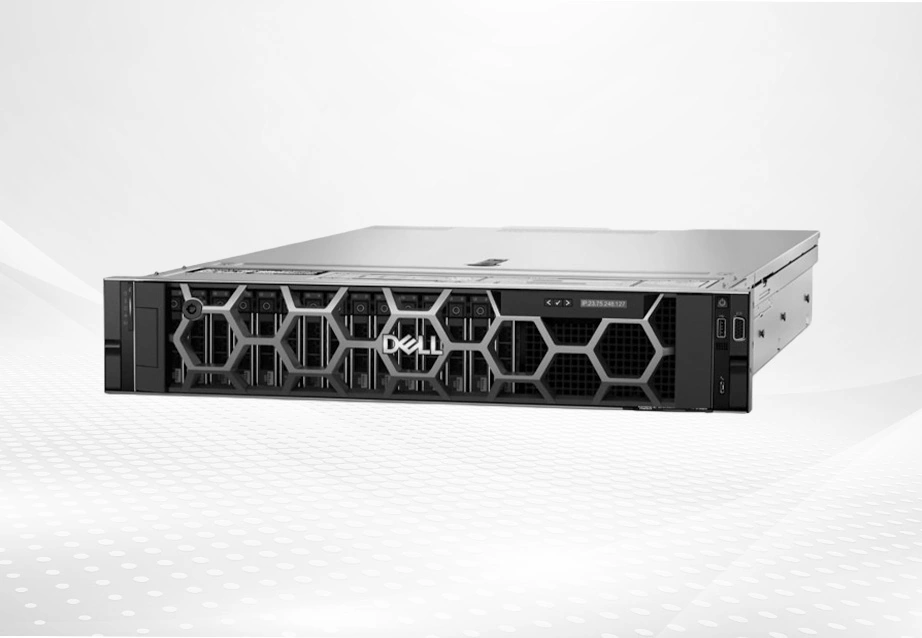
In many cases, enterprises compare general-purpose servers with AI-optimized platforms to determine the best long-term value. For example, industry-standard servers such as the Dell PowerEdge R750xs are frequently used in TCO benchmarking because they provide a well-balanced mix of CPU performance, memory expansion, NVMe support, and stable power efficiency. By analyzing these baseline TCO metrics, organizations can more accurately evaluate whether GPU-dense or hybrid configurations are a better investment for AI workloads.
Hybrid cloud, edge, or on-premise: which deployment for AI server upgrades?
Pick between mixed cloud, edge, and in-house setups. Each AI job gains from different bases. In-house gives full control and cost stability. Mixed cloud aids bendy growth. Edge servers bring low-delay inference.
Know the exact AI job to pick the right base model.
About Huaying Hengtong – Your Partner for AI Server Upgrades
Company profile & global export supply chain advantage
Huaying Hengtong acts as a world IT gear seller. We focus on business servers, big HDDs, network parts, and custom server builds for AI jobs. With years of send-out know-how, we back data centers, AI labs, and abroad builders with quick ship and sure buy paths.
AI-server related products & modular upgrade services.
We offer many AI-server-tied goods, including:
-
Huawei FusionServer product lines
-
GPU-ready 4U/8-GPU server frames
-
Enterprise-class HDDs (e.g., 16TB ST16000NM001G)
-
NVMe growth units and U.2/U.3 SSD modules
-
Rack add-ons and high-flow network gear
All plans back AI training groups, data-center AI response, and mixed-cloud AI runs.
Why choose Huaying Hengtong for your 2025 AI server upgrades
Buyers pick Huaying Hengtong for steady IT parts, fair bulk prices, and bendy custom work. Our stock size and send-out handle let world buyers build or update AI groups with trust and set times.
FAQ – 2025 Server Upgrades for AI Workloads
Q: What server upgrades are most important for AI workloads in 2025?
A: GPU upgrades, NVMe storage, high-core CPUs, and high-bandwidth networking are essential. Huaying Hengtong supplies GPU-ready servers, NVMe expansion units, and high-capacity HDDs for AI workloads.
Q: How do I choose the right AI server for training tasks?
A: Select a platform based on GPU density, memory capacity, and NVMe throughput. Huaying Hengtong helps customers match workloads with suitable GPU-ready or Huawei FusionServer platforms.
Q: Which products offer better performance for AI tasks?
A: Multi-GPU servers, large-memory CPU nodes, and NVMe-backed storage arrays typically offer the best performance. We supply these hardware categories in bulk for AI deployment needs.
Q: Should I use HDD or NVMe for AI data storage?
A: NVMe is ideal for high-speed training and rapid I/O, while HDDs such as 16TB enterprise models (e.g., ST16000NM001G) are best for large dataset storage. Huaying Hengtong provides both tiers for cost-performance balance.
Q: How can I compare different AI server upgrade options effectively?
A: Compare compute performance, GPU scalability, network bandwidth, memory headroom, and long-term expansion potential. We assist clients by providing multiple configuration options and upgrade paths.