


Fibre Channel Switch Types Overview for Modern SAN Architecture
What a Fibre Channel Switch Does in Storage Networking
A Fibre Channel switch sits at the heart of storage networking. It creates a fast, dedicated path for the most important data traffic. Companies depend on these switches because they decide how smoothly servers talk to storage arrays in a SAN. The switch builds a separate, lossless fabric. This means data moves with almost no delay and never gets dropped. Databases, virtual machines, and backup jobs all count on that steady flow. The switch handles zoning, login processes, and flow control so nothing jams up. When you need predictable speed and safe data movement, Fibre Channel switches deliver exactly that.
Why Enterprises Use FC Switches Instead of IP-Based Storage
Big companies still pick Fibre Channel switches over regular IP networks for one simple reason. They need rock-solid reliability and tiny delays. Ethernet can lose packets when traffic gets heavy. Fibre Channel never does because it uses buffer-to-buffer credits and a design built only for storage. That matters for busy databases, ERP systems, and large virtual setups. As storage grows into petabytes, the steady performance of FC fabrics beats shared IP lines every time. Even with newer options like iSCSI or NVMe over TCP, Fibre Channel stays the top choice when you cannot risk slowdowns or lost frames.
Key Components Inside a Fibre Channel Switching Environment
A working Fibre Channel setup has several main parts. You have the switches themselves, plus HBAs in the servers, controllers on the storage arrays, and the fabric services that tie everything together. Switches run the name server, handle logins, and enforce zoning rules. HBAs connect the physical cables from servers. Storage controllers finish the loop. Most setups use two completely separate fabrics for safety. If one path breaks, the other keeps everything running without a hiccup.
Core Fibre Channel Switch Models: High-Bandwidth Backbone for SANs
Core Switch Architecture & Scalability Features
Core Fibre Channel switches act as the main highway for the whole SAN. They come with more ports and much higher bandwidth than smaller switches. You can link many of them together with ISL trunking, so the fabric grows easily. In big data centers with racks full of storage, core switches carry the heaviest traffic without slowing down. They keep every connection full-speed, even when hundreds of servers pull data at once.
Core FC Switch Use Cases in Large Enterprise Datacenters
Core FC switches excel in datacenters that require heavy transactional throughput and multi-petabyte storage capacity. Large virtualization clusters, SAP HANA deployments, and enterprise high-performance workloads all benefit from centralized, high-bandwidth switching. When organizations transition to all-flash storage arrays, the performance expectations increase further, making core-class FC switches an indispensable part of the SAN strategy. Their consistent behavior and fabric stability allow datacenter teams to manage thousands of LUNs and numerous server nodes with predictable throughput.
How Core FC Switches Compare With High-End Ethernet Switches
A core FC switch is built for one job: moving storage data perfectly. High-end Ethernet switches handle all kinds of traffic at once. That difference matters. Ethernet needs extra settings and still might vary under load. FC switches simply never drop a frame. For anyone who puts storage stability first, core FC switches win every time.
Edge Fibre Channel Switch Models: Access-Layer Connectivity for Hosts
Edge Switch Port Density, Zoning, and Host Connectivity
Edge switches bring servers into the SAN. They offer lots of ports, so dozens or even hundreds of servers can connect at once. Admins use zoning on these switches to group servers by job or security rules. Edge switches take pressure off the core while keeping everything fast and safe.
When to Choose Edge FC Switches Over Unified IP Switches
Choose edge FC switches when your applications hate delays or jitter. Unified Ethernet tries to mix storage and normal network traffic, but it rarely matches the smooth behavior of Fibre Channel. Edge switches keep everything simple and fast because they only handle storage.
Edge-tier Placement in a Tiered Storage Fabric
Edge-tier placement in a tiered FC fabric allows the SAN to distribute traffic efficiently. Edge switches typically connect directly to server HBAs, while core or director switches handle aggregation. This hierarchy reduces oversubscription at the core and enables future fabric expansion. By building a structured, tiered architecture, enterprises achieve operational clarity and easier troubleshooting, which helps maintain storage service quality.
Director-Class Fibre Channel Switches: Modular, Fault-Tolerant, Carrier-Grade
Director Switch Redundancy & Non-Disruptive Scalability
Director switches are the tanks of the SAN world. Everything inside is duplicated: power supplies, control blades, fabric cards. You can add or replace parts without turning anything off. One chassis can grow to hundreds of ports over the years.
Director Switch vs. Core Switch: Which Fits Enterprise Growth
Both handle heavy traffic, but directors go much further on redundancy and growth. Core switches work great as the main backbone today. Directors are ready for tomorrow when you might double or triple the size again.
Industries That Prefer Director-Class FC Switches
Banks, telecom companies, and big cloud providers love directors. They run systems where even one minute offline costs millions. Directors give them the no-single-point-of-failure design they need.
Fibre Channel Switch vs Ethernet Switch: Performance, Latency, and Workload Fit
FC vs Ethernet: Latency, IOPS Consistency, and Congestion Control
Fibre Channel wins on steady speed and low delay every time. Ethernet serves many purposes, so performance can jump around. FC is built from the ground up to keep storage flowing perfectly.
FC vs Ethernet: Reliability, Lossless Transport, and Buffer-to-Buffer Credits
FC uses buffer credits, so frames never vanish. Ethernet tries to avoid loss with newer tricks, but it still needs careful tuning. For pure reliability, FC stays ahead.
Choosing Between FC SAN and IP SAN for 2025 Enterprise Workloads
Pick FC when performance must be perfect and predictable. Choose IP when budget or simple setup matters more. Most high-transaction or large virtual environments still stay with FC.
How to Select the Right Fibre Channel Switch Type (Core vs Edge vs Director)
Selection Factors: Port Scalability, Redundancy, and Workload Type
Think about how many ports you need today and tomorrow. Think about how much downtime you can afford — none for directors, very little for core. Match the switch class to the job size.
FC Fabric Design: Single-Fabric vs Dual-Fabric Considerations
Fabric design determines SAN fault-tolerance, making dual-fabric designs the recommended structure for mission-critical servers. In a dual-fabric model, the SAN continues to operate even if one fabric experiences a fault. This prevents application downtime and protects storage operations from interruption.
Migration Paths from 16G/32G FC to Newer 64G/128G FC Technologies
Most modern switches let older and newer speeds run side by side. You can upgrade piece by piece instead of all at once.
Huaying Hengtong Fibre Channel Solutions & Enterprise Advantages
Our Fibre Channel Switch Supply Portfolio (Core, Edge, Director Models)
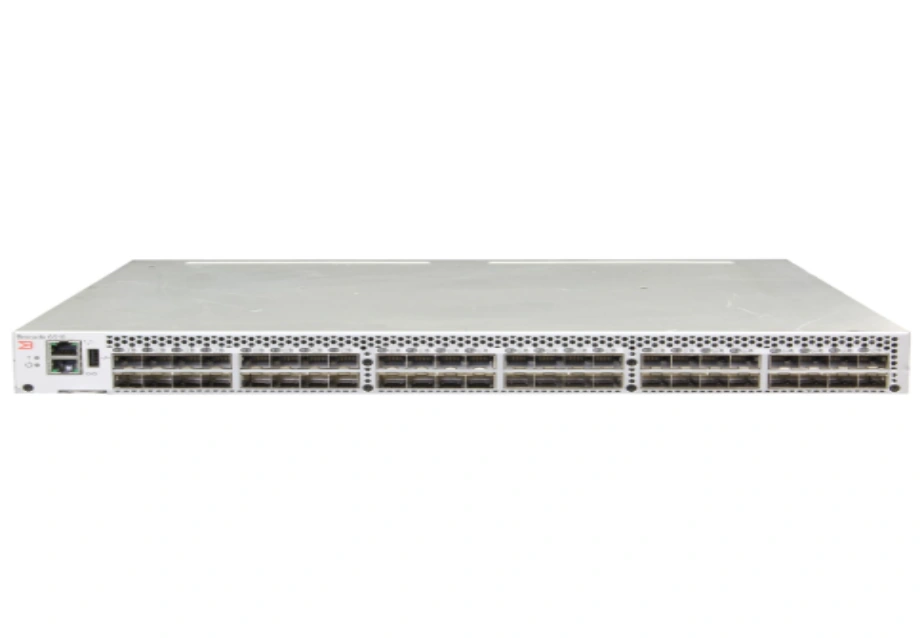
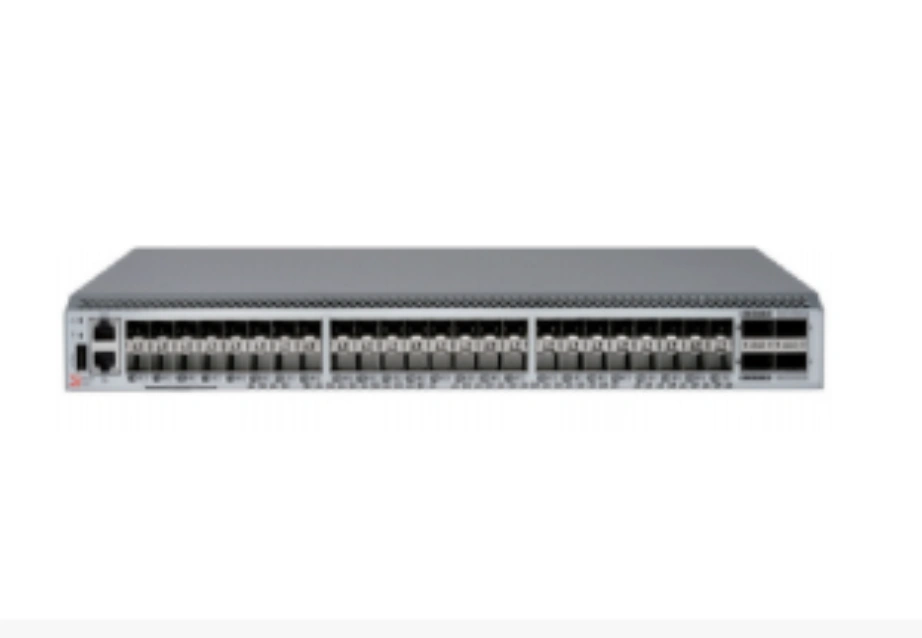
Huaying Hengtong keeps popular models ready: Brocade 6520, Brocade G620, Brocade G630, and Brocade BR6510. These cover every need from small edge setups to full director-class fabrics.
Compatibility Advantages With Mainstream FC Ecosystems
All our switches work smoothly with major HBAs and storage arrays. You can add them to existing SANs without worry.
How Huaying Hengtong Supports Datacenter SAN Deployment & Expansion
Huaying Hengtong supports SAN deployment and scaling by supplying FC switch hardware, server components, and storage networking equipment. Our experience in IT equipment wholesale, enterprise server supply, and storage infrastructure sourcing allows us to match the right switch model to real-world workloads. We assist customers in expanding existing fabrics or building new high-availability FC networks using models.
Our Value: Global Delivery, Technical Matching, and Pre-Deployment Testing
Fast worldwide shipping, expert model selection, and optional testing before delivery — that is how we make SAN projects simple and safe.
FAQ
Q: What Fibre Channel switch type is best for large enterprise SAN deployments?
A: Large enterprise SAN deployments typically benefit from using director-class FC switches due to their modular scalability and redundant architecture. Huaying Hengtong supplies director-capable models such as the Brocade G630 for customers requiring long-term expansion.
Q: How to choose between core and edge Fibre Channel switches?
A: The choice depends on function: edge switches connect hosts at the access layer, while core switches aggregate SAN traffic. Enterprises can choose models like Brocade G620 for edge connectivity or Brocade 6520 for core-tier deployments.
Q: What are the advantages of Fibre Channel switches compared with Ethernet switches?
A: Fibre Channel switches offer deterministic performance, lower latency, and lossless flow control. These advantages make FC switches more suitable for storage workloads than general-purpose Ethernet switches.
Q: Which Fibre Channel switch brands or models are commonly recommended for SAN expansion?
A: Recommended models depend on port count and workload size. Many enterprises choose models similar to Brocade 6520, G620, or G630 due to strong ecosystem compatibility and broad SAN adoption.
Q: How do I select a Fibre Channel switch for virtualization workloads?
A: Virtualization workloads need predictable storage performance, making FC switches with consistent throughput ideal. We often help customers choose mid-to-high-capacity switches such as the BR6510 or G620, depending on cluster size.