


Enterprise HDD Capacity Fundamentals and Why It Matters for Workload Performance
Enterprise HDD capacity remains one of the most important metrics when evaluating storage infrastructure for various workloads. High-capacity enterprise-grade HDDs allow organizations to consolidate storage, reduce rack footprint, and minimize operational overhead while maintaining stable performance. Understanding how capacity interacts with reliability and workload demands is critical for effective long-term storage planning.
Key Factors That Define Enterprise HDD Capacity and Reliability
Enterprise HDD capacity is determined not only by raw terabytes but also by platter density, recording technology, cache size, and interface type. Drives optimized for enterprise use are typically rated for sustained workloads and come with manufacturer-specified endurance metrics like MTBF (Mean Time Between Failures). By choosing certified enterprise HDDs, companies reduce the risk of data loss and ensure stable performance under heavy or continuous workloads.
How Capacity, RPM, Cache, and Interface Influence Workload Throughput
Capacity alone does not guarantee performance. Rotational speed (e.g., 7200 RPM), cache size (e.g., 256 MB), and interface type (SATA or SAS) all contribute to how quickly data can be accessed, written, or streamed. For example, enterprise drives with SATA III and 256 MB cache provide suitable throughput for sequential workloads. When capacity, interface, and caching are balanced, high-capacity drives can meet both performance and density requirements.
Enterprise HDD Capacity Comparison Across Major Workload Categories
You must match enterprise HDD capacity to task traits. What fits archiving may not work best for analytics or mixed I/O tasks. The right match helps skip extra costs or short supplies.
Capacity Requirements for Backup, Archiving, and Cold Storage Applications
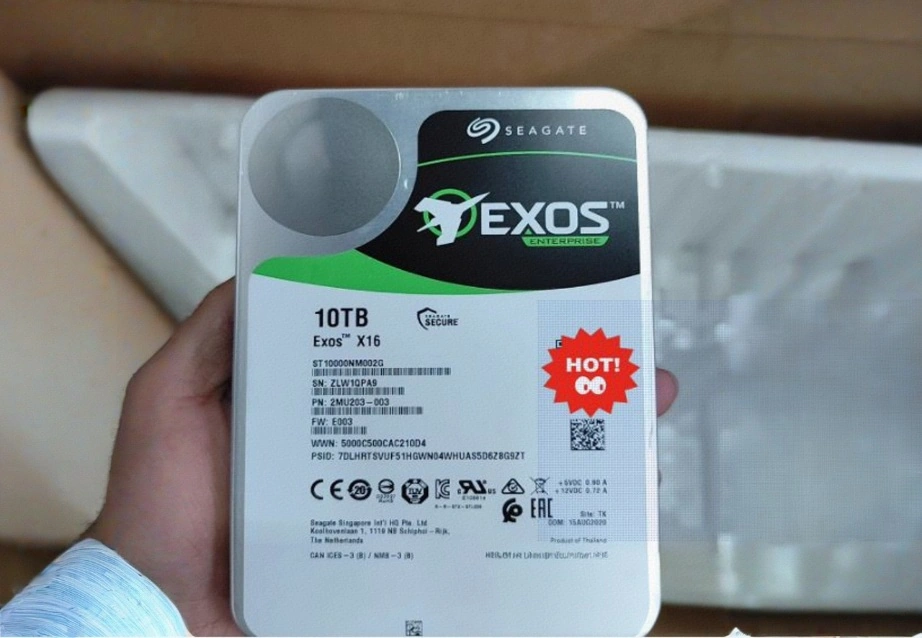
Backup and archive tasks write data once and read it rarely. For these, high-capacity HDDs give a strong cost-per-TB value. They also shrink setup space. Drives like Seagate ST10000NM002G 10 TB SATA fit growing backup groups. For bigger keep needs, larger-capacity enterprise HDDs (like 16 TB class drives in our list) bring lasting steadiness and storage capacity.
HDD Capacity and Performance Behavior in Analytics, Logging, and Mixed-IO Workloads
Analytics and logging tasks mix reads and writes. They involve regular access and fair flow needs. In these cases, enterprise HDDs that mix capacity with steady speed are better. Good cache and solid firmware help. These beat plain high-density drives. Mid- to high-capacity options leave space for growth. They avoid I/O blocks common in small home drives.
High-Capacity HDD Options for Object Storage, AI Data Pipelines, and Media Libraries
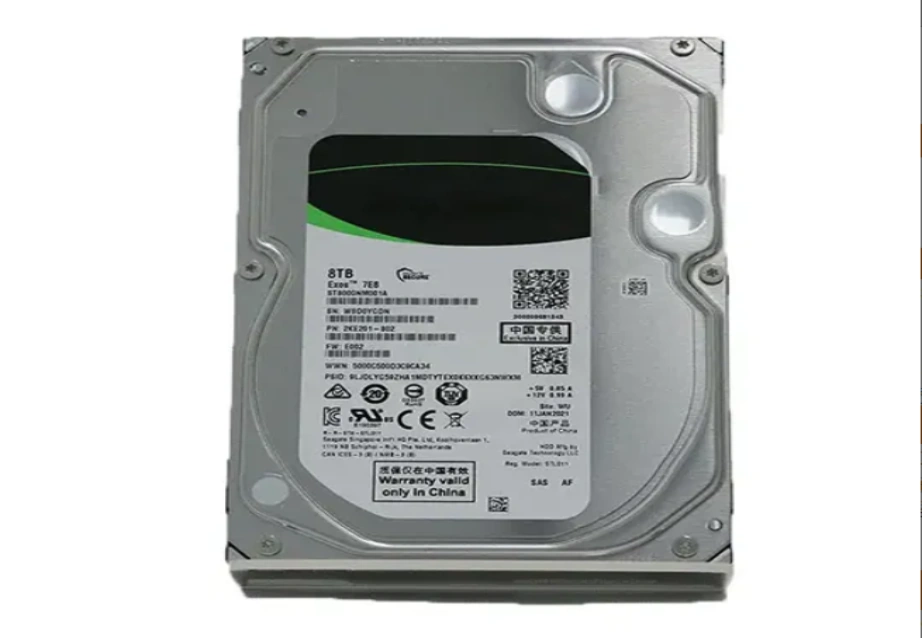
Object storage setups, big media collections, and AI data lines need capacity and growth room. High-capacity enterprise HDDs, especially 16 TB class drives, suit building multi-petabyte systems. For easy or step-by-step storage growth, smaller business-rated HDDs like Seagate ST8000NM017B 8 TB Hard Disk serve as cheap base parts for layered storage or growing groups. These drives cut per-TB cost. They ease upkeep and drop running load in big setups. Business-grade drives assure long life and stability with heavy data tasks.
Enterprise HDD Capacity vs SSD and Hybrid Storage Strategies
Business storage plans now mix HDD capacity with SSD speed more often. This creates hybrid builds that give both amount and quickness. Capacity-based HDDs make the main storage layer. SSDs manage tasks that need low delay. Such plans improve cost, amount, and speed. As a hardware seller, we help these hybrid fixes by providing enterprise HDDs and matching storage parts.
HDD Capacity Advantages for High-Volume Storage Versus Flash-Based Alternatives
Enterprise HDD capacity is still unbeatable when it comes to raw terabytes per dollar. For bulk data storage — backups, archives, media storage, surveillance footage — HDDs remain far more economical than SSDs. Organizations managing large datasets benefit from reduced hardware count, lower power per TB, and predictable storage behavior over time.
How Hybrid Storage Architectures Balance Capacity, Cost, and Performance
In hybrid storage architectures, enterprise HDDs handle cold data and bulk storage while SSDs accelerate hot data, metadata, and random I/O tasks. This layered approach ensures capacity scalability while optimizing performance. Our clients often deploy arrays where HDDs provide base capacity, and SSDs improve responsiveness, achieving balanced cost and performance.
Key Considerations for Determining the Ideal HDD-to-SSD Ratio in Enterprise Systems
When defining HDD-to-SSD ratios, workload type, data access patterns, and growth forecast should guide the decision. For write-heavy archival workloads, a higher proportion of HDD makes sense; for mixed or read-heavy workloads, adding SSD layers improves responsiveness. Configuring such hybrid systems requires an understanding of both storage media — a service we provide through consultation and supply of compatible enterprise components.
Enterprise HDD Capacity Planning for Cost Efficiency and Long-Term Scalability
Good capacity planning keeps storage setups cost-smart, growing, and dependable as data needs rise. Enterprise HDD capacity shapes not just storage size. It also hits running cost, rack space, cooling, and long-term upkeep.
Evaluating Cost-per-TB, Drive Density, and Failure Rates Across Capacity Classes
High-capacity enterprise HDDs lower cost-per-TB. They do this by cutting drive numbers for a set storage goal. This grouping shrinks rack space, power use, and cooling calls. Plus, enterprise HDDs often show better dependability numbers. This cuts the total cost of ownership (TCO) with fewer swaps and less upkeep load. Our supply line assures steady access to enterprise drives in various capacity groups for long-term plans.
How Rack Utilization, Cooling Requirements, and Power Budgets Affect Capacity Choices
When rolling out storage on a large scale, drive amount, air flow, and power use are key. Higher-capacity HDDs allow better rack use, less wire mess, and sharper power/cooling per TB. We help clients weigh capacity needs against running limits. We suggest checking enterprise HDD fixes that match their setups.
Forecasting Capacity Growth for Rapidly Expanding or Seasonal Enterprise Workloads
Enterprise tasks can grow fast. For example, watch videos, media holds, data analytics, or backups may jump suddenly. The right capacity outlook helps skip gaps and pricey mid-run changes. By mixing need checks with supply skills, we aid clients grow storage smoothly as tasks spread.
Enterprise HDD Capacity Solutions from Huaying Hengtong for Data-Driven Workloads
Enterprise HDD capacity needs works best with a trusted seller who gives real stock, match advice, and system help. At Huaying Hengtong, we fit this need just right. We serve as an IT gear wholesaler, hard disk seller, and server custom maker to aid clients in setting up business-grade storage solutions.
How Huaying Hengtong Supports Enterprise-Level Storage Expansion with High-Capacity Modules
At Huaying Hengtong, we keep a large stock of enterprise HDDs and server-level parts. This lets clients grow storage quick without long waits. We deal with known business-grade HDD models. We assure supply line realness and warranty aid.
Compatible Enterprise HDD Options for Server and Data Center Deployments
We supply enterprise HDDs like Seagate ST10000NM002G 10 TB SATA drives for growing storage groups. For rollouts needing step growth or bendy storage layers, we also provide Seagate ST8000NM017B 8 TB Hard Disk. It fits budget-watch or layered-storage setups. These drives often go in storage spots, NAS systems, or backup groups to build cheap, high-capacity storage fixes.
Advantages of Huaying Hengtong: Supply Stability, Quality Assurance, and Custom Configuration
Our strong points rest in steady supply, checked realness, and custom setup aid. As a wholesaler and server joiner, we help clients pair HDD capacity, connection type, and server hardware match. This cuts risks from wrong parts. We also give after-sales aid and help for rollout, setup, and later growth.
FAQ: Enterprise HDD Capacity and Workload Selection
Q: What enterprise HDD capacity is ideal for bulk data storage like backups or archives?
A: For bulk data storage, high-capacity enterprise HDDs like 10 TB or 16 TB class drives work well. Or use scaled groups with 8 TB enterprise drives. They give good cost-per-TB value and grouping gains. These drives shrink rack space and bring dependable long-term storage.
Q: For mixed workloads (analytics, logging, mixed I/O), is a high-capacity HDD always the right choice?
A: Not every time. Mixed tasks gain from balance between capacity and flow. Business-grade HDDs with fair capacity like 8 TB or 10 TB, and good cache/connection do better than home-class drives. Pairing these HDDs with SSDs or tuning RAID/group settings often raises stability and speed.
Q: Can enterprise HDDs replace SSDs entirely for data center storage?
A: For cool storage, backup, or big fixed data sets, enterprise HDDs cost less than SSDs. But for low-delay tasks or high IOPS needs, hybrid storage builds a mix of HDDs (for capacity) and SSDs (for speed). This gives better full ROI.
Q: What should be considered when planning storage scaling with enterprise HDDs?
A: Main points include drive amount per rack, power and cooling needs, connection match, and long supply access. A steady seller like Huaying Hengtong assures you get checked business-grade HDDs and aid for setup and growth plans.
Q: Are enterprise-grade HDDs enough for future-proof storage systems in fast-growing environments?
A: Yes, if picked right. High-capacity enterprise HDDs bring growth room, better cost-per-TB, and long dependability. Paired with server and setup plans, they make a firm base for the coming data rise. This works well with seller aid and ties like those from Huaying Hengtong.