


Can DL380 Servers Handle Enterprise AI Workloads Efficiently?
What Makes HPE ProLiant DL380 Gen10/Gen11 Servers Suitable for AI?
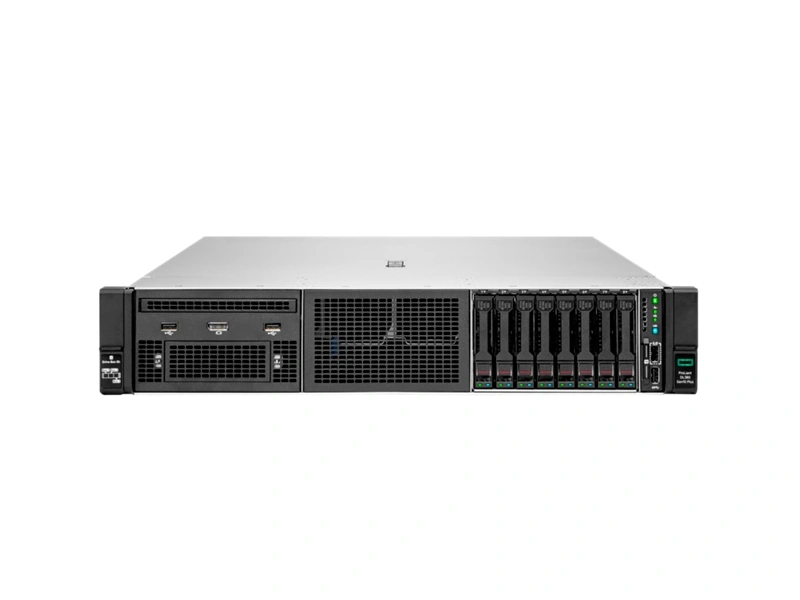
The HPE ProLiant DL380 Gen10 and Gen11 servers are built to handle tough enterprise AI tasks. They use a strong GPU setup and a flexible structure. The HPE ProLiant DL380 Gen11 server can hold up to 8 single-width GPU cards or 3 double-width GPU cards. This lets businesses use strong NVIDIA® GPUs for AI speed-up. Plus, it works well with AI/ML containers from NGC. As a result, it gets simpler to set up machine learning tools and models.
Container management is key for growing AI setups. The DL380 works smoothly with Red Hat® OpenShift. This helps businesses run container-based AI tasks well. It fits your mixed setup. The HPE ProLiant DL380 Gen11 server makes it easy to handle computing systems. It offers a straightforward and adaptable way to operate and maintain. This ease is very useful in multi-node AI training setups. Those setups need control over virtual and direct hardware environments.
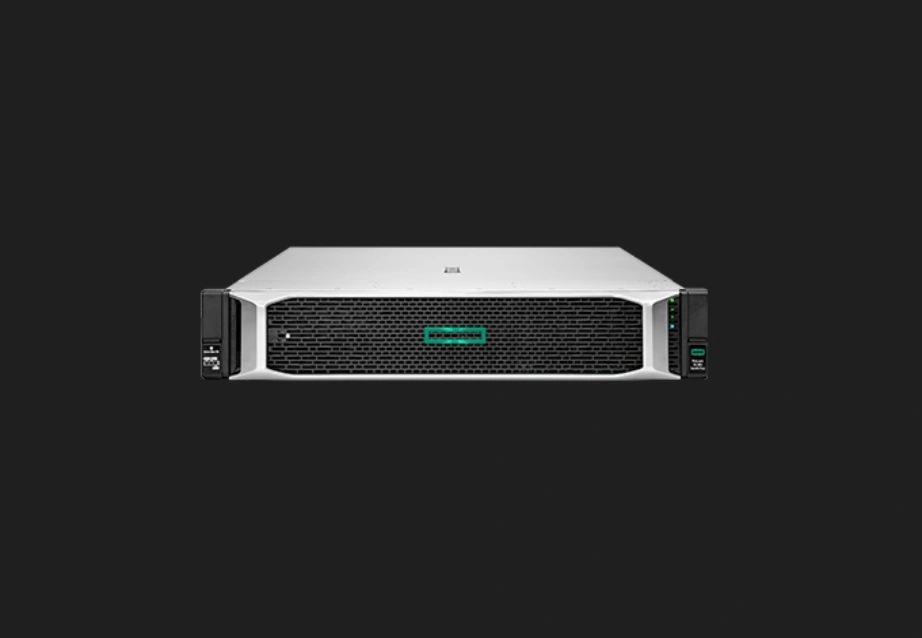
The modular design of the DL380 series enhances adaptability in enterprise data centers. Whether expanding GPU resources or scaling storage to meet growing data demands, the DL380’s chassis accommodates diverse configurations without architectural overhauls.
How Do DL380 Servers Optimize AI Inference and Training Processes?
DL380 servers are made to speed up AI training and inference. They use GPU boost along with fast memory and storage systems. The HPE ProLiant DL380 Gen11 server suits compute and data storage tasks. Those tasks need very high core numbers, GPU power, network, and I/O speed. This kind of output is vital for instant AI inference in cases like voice recognition and fraud detection.
Memory speed is another big factor in training deep learning models. It supports up to 32 DDR5 memory modules, with a top speed of 5600MT/s. It handles RDIMM, and the max memory size is 8TB. This makes the Gen11 version quite good for managing large datasets during model updates.
Also, the DL380 Gen11 supports GPUDirect®. This allows direct memory access between GPUs and NVMe storage devices. It cuts out extra CPU delays. As such, this cuts down wait times during model training. At the same time, it boosts input/output flow for data-heavy tasks.
Which AI Workloads Benefit Most from DL380 Server Architecture?
The HPE ProLiant DL380 structure works very well for natural language processing (NLP) and computer vision. These jobs need big model sizes and fast processing. They gain from the system’s GPU features and memory output.
In areas like finance, healthcare, and manufacturing, predictive analytics is a main use of enterprise AI. The mix of high-core-count CPUs and quick NVMe storage allows instant handling of structured and unstructured data. This drives useful insights.
Deep learning models trained on huge datasets also need solid compute power and smooth data flow. It supports up to 2*4th-generation Sapphire Rapids or 5th-generation Emerald Rapids Intel® Xeon® Scalable processors, up to 64 cores per processor. This lets DL380 servers manage parallel training tasks without trouble.
How Does the DL380 Compare to Dell PowerEdge in Enterprise AI Scenarios?
DL380 Gen11 vs Dell PowerEdge XE9680: A Performance Perspective
When you compare the HPE ProLiant DL380 Gen11 to the Dell PowerEdge XE9680 for AI output, tests like MLPerf on NVIDIA H100 PCIe setups give clear data. The DL380 Gen11 has support for PCIe 5.0 expansion slots—Standard 3 PCIe 5.0 slots, supports up to 8 PCIe 5.0 slots. This gives great flow for GPUs. It greatly improves ML task output.
For heat control, the DL380 frame design spreads air well across packed GPU areas. It uses an optional up to 2200W 1+1 hot-swappable redundant power supply, supporting up to 96% titanium; it supports hot-swappable redundant fans. This keeps steady conditions under heavy compute loads.
DL380 Gen10 vs Dell PowerEdge R760xa: Deployment Flexibility Analysis
For mixed cloud setups, the HPE ProLiant DL380 Gen10 has clear benefits in virtualization. The HPE ProLiant DL380 Gen10 is the 10th-generation 2U rack-mounted server from HP Enterprise (HPE). It is designed for high-performance computing, virtualization, database, and hybrid cloud workloads. This allows a smooth fit into current virtualization systems. It also supports new container-based apps.
With its broad CPU options—from Intel Xeon Scalable (Skylake/Cascade Lake) processors to high-TDP CPUs—high-performance CPUs with TDP up to 205W are suitable for intensive computing tasks. The DL380 Gen10 fits well with business IT setups. Those setups are shifting to AI-focused operations.
Storage and Networking: DL380 vs Dell’s AI Portfolio Options
Storage speed is key in AI flows with large datasets. The DL380 Gen11 supports up to 36 EDSFF 3.S 1T NVMe hard drives or 18 EDSFF 3.S 2T NVMe hard drives. It offers a tri-mode HPE Smart Array controller with RAID support. This lets you set up options that balance size, speed, and backup.
Networking features include an optional network adapter based on a standard PCIe slot and OCP 3.0 network cards. It supports both Ethernet and Infiniband based on cluster needs. For spread-out AI clusters where delay counts, this range ensures the best connection setups.
Why Is the HPE ProLiant DL380 a Strategic Choice for Mid-to-Large Enterprises?
How Does DL380 Fit into Existing IT Infrastructure Without Disruption?
The HPE ProLiant DL380’s backward compatibility with legacy infrastructure makes it an ideal transitional platform for enterprises moving toward AI adoption. Its hybrid cloud readiness is enhanced through GreenLake integration, enabling on-demand compute while maintaining on-premise control.
Support for traditional virtualization platforms alongside modern container ecosystems ensures that enterprises don’t need to abandon existing workflows when deploying new AI capabilities.
What Security Features Make the DL380 Enterprise Ready for AI?
Security matters a lot in enterprise AI setups with sensitive data. The HPE ProLiant DL380 Gen11 server supports trusted silicon root. This can handle tasks like secure boot, memory encryption, and secure virtualization well. Paired with runtime encryption and firmware consistency validation, these guards stop bad code from harming training data or inference results.
Businesses also gain from quick threat spotting and auto recovery tools. These ensure ongoing operations even in security issues.
Can the DL380 Scale Alongside Growing Enterprise AI Demands?
DL380 servers are built for growth in spread-out cases as data sizes increase. With options to add compute, memory, and storage, they adjust easily across AI growth stages—from testing to full use.
Plus, varied setup choices like on-premise racks, shared sites, or edge spots let businesses match structure to their work needs.
Why Choose Huaying Hengtong as Your Trusted Partner for DL380 Server Solutions?
Who Are We at Huaying Hengtong?
At Huaying Hengtong, we focus on delivering strong computing structures for business use. As a top IT gear seller and server tailoring expert, we know what companies need for advanced tasks like artificial intelligence.
What Do We Offer as an Authorized Distributor of HPE ProLiant DL380 Servers?
Product Availability and Custom Configuration Services
We keep a large stock of HPE ProLiant DL380 Gen10 and Gen11 servers in various setups. If your task focuses on GPU speed-up, high memory size, or NVMe quickness, we provide tailored fixes. These include processors like Intel® Xeon® Scalable (up to 64 cores), DDR5/DDR4 memory modules (up to 8TB), and storage groups using NVMe or SAS/SATA drives.
Technical Consultation for Enterprise AI Deployment
Our group gives skilled one-on-one advice based on your specific task needs. From model training tweaks to structure sizing in finance or healthcare, we match tech details with business results.
Post-Sales Support and Maintenance Assurance
We provide full life-cycle help—from first setup tips through firmware updates to upkeep planning. This ensures steady long-term work. Our role as both server seller and parts provider lets us act fast on changing needs.
FAQ about HPE ProLiant DL380 Servers in Enterprise AI Workloads
Q: Which brand offers better server options for enterprise-level AI workloads?
A: For businesses aiming at growing AI setups with a safe structure, HPE’s ProLiant DL380 Gen11 shines. It has support for up to three double-width GPUs, DDR5 memory up to 5600MT/s, and chip-to-cloud security features.
Q: How do I choose a server configuration for deep learning model training?
A: Pick setups like the HPE ProLiant DL380 Gen11 that offer up to 64-core Intel Xeon processors and 8TB DDR5 memory. Make sure it has high-flow NVMe storage and multiple PCIe 5.0 slots for GPU growth.
Q: What makes certain servers more compatible with hybrid cloud environments?
A: Servers like the DL380 Gen10 give smooth virtualization help, along with container control tools such as OpenShift. This allows flexible use across public cloud add-ons and private setups.
Q: Are there server providers who also support hardware customization?
A: Yes. Huaying Hengtong offers server tailoring services based on specific CPU models (e.g., Sapphire Rapids), memory capacity (up to 8TB), and disk formats (SATA/NVMe). We fit solutions exactly to business task needs.
Q: Who are reliable suppliers for server hardware components like CPUs or hard drives?
A: As a trusted IT gear seller, Huaying Hengtong supplies not just full servers but also matching parts. These include Intel Xeon CPUs, DDR4/DDR5 memory modules, NVMe SSDs, SAS drives, and business-level NICs.