
Navigating the server infrastructure landscape in 2026 requires a strategic balance between maximizing performance and managing the total cost of ownership (TCO). As artificial intelligence and high-performance computing (HPC) demands escalate, the architectural capabilities of server memory have become a pivotal factor in hardware procurement. We at Huaying Hengtong have observed a distinct divergence in client requirements, where the choice between the established DDR4 standard and the high-speed DDR5 architecture defines the future readiness of data centers. As a seasoned IT equipment wholesaler, we help businesses analyze these technical nuances to ensure their infrastructure aligns with both their budget and their computational goals.
DDR5 vs. DDR4 Architecture: Bandwidth, On-die ECC, and Power Efficiency
Comparing Data Transfer Rates and Burst Lengths
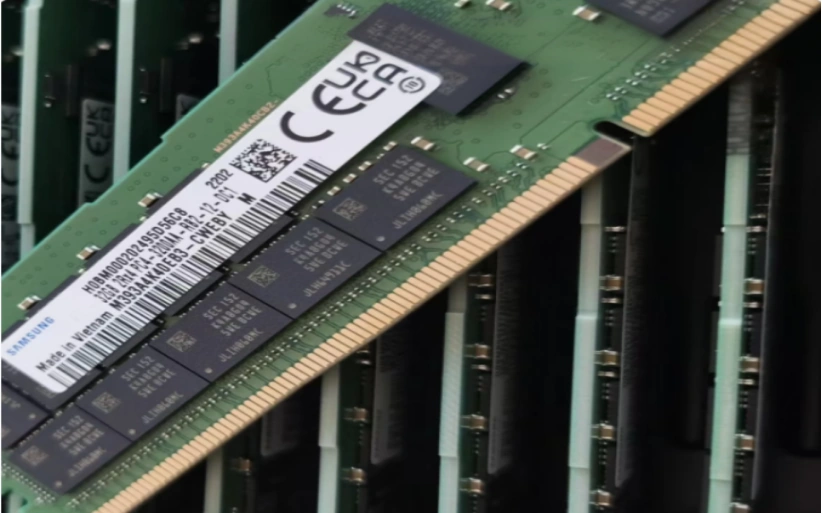
The biggest clear difference between these memory types shows up in basic data speeds. These affect tasks that need lots of bandwidth. DDR4 has worked well for the field. It tops out at real speeds near 3200 MT/s. We often provide modules like the Samsung M393A4K40EB3-CWE (32GB DDR4-3200). But DDR5 changes things a lot. It doubles the burst length from 8 to 16. This gives much better real bandwidth. New modules such as the Samsung M321R8GA0PB0-CWM, a 64GB DDR5 RDIMM, run at 5600 MT/s. They deliver the flow needed to support the huge number of cores in 2026’s CPU lines. And they do so without causing slowdowns.
Power Management (PMIC) and Reliability Features
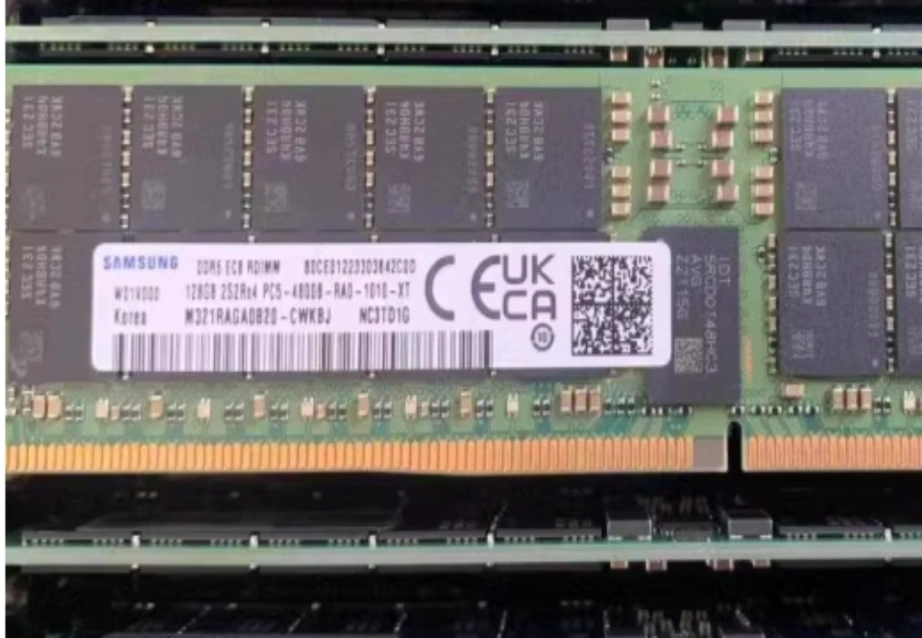
Power use and data safety have gotten a big redesign with DDR5’s on-module Power Management Integrated Circuits (PMIC). DDR4 depends on the main board for voltage control. But DDR5 puts this right on the DIMM. It also drops the working voltage to 1.1V. This change cuts down on signal issues. Plus, it allows On-die ECC (Error Correction Code). That lets the Samsung M321R8GA0PB0-CWM spot and fix bit mistakes on its own. For business users, this means better system steadiness. It also cuts downtime. That’s a vital plus for key servers that run non-stop.
Server Platform Compatibility: Intel, AMD, and Motherboard Constraints
Processor Generations: Which CPUs Require DDR5?
Picking the right memory tech mainly depends on the CPU generation that drives your server setup. By 2026, the market splits in a straightforward way. The 4th and 5th Gen Intel Xeon Scalable processors (Sapphire Rapids and Emerald Rapids) need DDR5 to work. The same goes for AMD EPYC 9004 series processors. On the other hand, common setups with 3rd Gen Intel Xeon Scalable CPUs stick to the DDR4 world. We tell our clients to check their CPU plans closely. Buying the wrong memory can lead to parts that don’t fit. And that stops setups from moving forward.
Physical and Electrical Incompatibility: Why You Can’t Mix
Design changes in shape make sure DDR4 and DDR5 modules can’t swap places by mistake. Nor can they mix in the same server box. The main notch on a DDR5 DIMM sits in a different spot than on DDR4. The pin number and power setup differ at the core too. Trying to push a DDR4 module into a Gen11 server slot won’t work physically. This shows why exact buying matters. As a focused server customization supplier, we check every setup against the exact main board limits before sending it out.
Workload Optimization Trends in 2026: AI, HPC, and Virtualization
High-Bandwidth Demands of AI Training and Inference
AI training and inference tasks grow quickly in 2026. This makes memory bandwidth a fresh limit on speed. Deep learning setups need quick data moves between memory and GPUs. Here, DDR5’s strong bandwidth is a must. For example, top workstations like the Lenovo ThinkStation P8 get supplied to data teams by us. They use DDR5 to get the most from its Threadripper PRO design. Slower memory in these cases would waste the costly computing power. So, DDR5 stands as the clear pick for AI setups.
Cost-Effective Scenarios for Standard Virtualization and Databases
New tech draws attention, but old tasks like file servers, print servers, and basic SQL databases often gain little from DDR5’s extra cost. For these, DDR4’s delay performance stays solid. And the price per gigabyte is much lower. We often suggest strong DDR4 options for setups like the Dell PowerEdge R550. There, storage size matters more than pure speed. By choosing tested tech for these jobs, companies can shift more funds to storage or network improvements.
Total Cost of Ownership Analysis: Is the Upgrade Justified?
Balancing Higher Component Costs with Efficiency Gains
To check the Total Cost of Ownership (TCO), look past the first buy price. Think about ongoing running costs too. DDR5 modules cost more on the market. That’s due to their detailed build and built-in PMIC. But their higher density (up to 128GB per stick) and better energy use can cut cooling and power bills over time. In big data centers, DDR5’s lower power per task can cover the starting extra cost. This holds true especially at large scale in 2026.
Supply Chain Trends: Availability and Future Pricing
Supply chains in 2026 change as makers focus on DDR5 output. They gradually make DDR4 a past product. DDR4 stays plentiful and cheap right now. But its supply will drop over time. That could hold prices steady or raise them for spare parts. Smart buying plans should note this shift. We track world stock levels each day. This helps our clients get both fresh and old parts for their different setup spans.
Why Partner with Huaying Hengtong: Your Global IT Equipment Wholesaler
One-Stop Solution for Server Memory and Storage
Getting real, strong enterprise hardware needs a supplier with wide and varied stock. Хуайинг Хенгтонг runs as a full IT equipment wholesale center. We carry items from the newest DDR5 memory to old parts. Also, as a committed hard disk wholesaler, we offer big-capacity business drives. These pair well with your server builds. So, you can buy all main parts—memory, storage, and processors—from one trusted spot.
Custom Configuration and Enterprise-Grade Testing
We go beyond basic selling. Our professional server customization services fit the exact project’s wants. This could mean a Huawei server for a certain network setup. Or it might be a tailored HPE build. Our tech team puts together and checks the hardware. They make sure it fits and works well. As a reliable Huawei wholesaler and ally for other big names, we promise every item sent worldwide hits strict quality marks. This eases your setup steps.
Часто задаваемые вопросы
Q: Which server memory brand is recommended for maximum reliability in enterprise environments?
A: For enterprise servers, we strongly recommend sticking to Tier-1 manufacturers like Samsung, SK Hynix, or Micron, as they produce the DRAM chips themselves. A module like the Samsung M321R8GA0PB0-CWM is an industry standard for reliability. Huaying Hengtong sources directly from these major manufacturers to ensure our clients receive authentic, high-reliability memory for their critical infrastructure.
Q: How should I choose between DDR4 and DDR5 for a new server deployment in 2026?
A: The choice depends primarily on your specific workload and budget constraints. If your applications involve AI, machine learning, or high-performance computing, the bandwidth of DDR5 is essential. However, for general IT tasks, web hosting, or secondary storage servers, DDR4 remains a highly cost-effective option that delivers sufficient performance.
Q: Is it possible to upgrade a server from DDR4 to DDR5 at a later date?
A: No, you cannot simply swap the memory modules because the slots on the motherboard are physically different and the electrical architectures are incompatible. To move from DDR4 to DDR5, you would need to replace the entire server motherboard and processor. Therefore, we advise planning your long-term performance needs carefully during the initial purchase.
Q: What are the benefits of buying server memory and hard drives from a wholesaler?
A: Purchasing from a dedicated IT equipment wholesaler and hard disk wholesaler significantly reduces procurement costs through bulk pricing and ensures better stock availability. Unlike retail channels, we can provide large quantities of matched-batch memory and enterprise storage, which is crucial for maintaining consistency and performance across large server clusters.
Q: Does On-die ECC in DDR5 completely eliminate the need for standard ECC on the module?
A: No, On-die ECC is a feature designed to manage the increased bit-error rates caused by the shrinking lithography of DDR5 chips; it protects data inside the chip. However, for full enterprise-grade data protection, standard ECC (Side-band ECC) is still required to protect data during transmission between the memory and the CPU. Our enterprise DDR5 modules feature both protections for maximum safety.